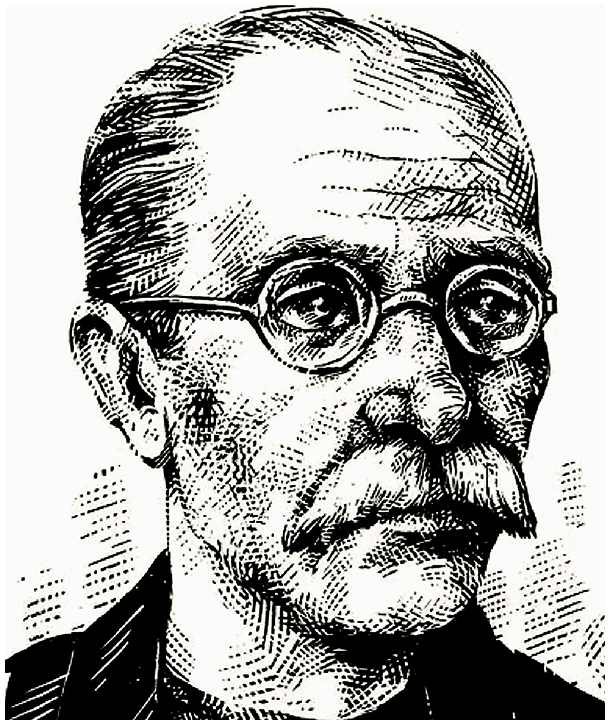
Marko Kostov Cepenkov is a prominent collector and affirmer of Macedonian folk art, a church-educational and cultural figure. He was born into a poor family in the village of Oreovec, near Prilep, where as a young man he studied the blacksmith’s trade, after which he worked as an apprentice with several masters in Prilep, Struga, Kichevo and Bitola. His initial short-term education was in Greek with local teachers. After he began to engage in crafts independently, he joined the church community, advocating for the introduction of the Macedonian folk language.
From 1856, Marko Cepenkov turned to collecting, encouraged by the then teacher in Prilep – Dimitar Miladinov, during his teaching career in Prilep, as well as by Kuzman Shapkarev, through his published folklore materials. Marko Cepenkov’s collecting activity lasted for more than 40 years. He differs from other collectors in that he personally recorded all the materials, the number of materials as well as the genre diversity of them. He collected his folklore and ethnological materials in the Prilep, Bitola, Skopje, Shtip, Veles and Debar regions. These include proverbs, sayings, stories, songs, riddles, beliefs, curses, blessings, spells, dreams, customs, etc.
Publishing his autobiography in 1896, he wrote a dozen poems as well as the drama “Crne Vojvoda”, which he calls: “a historical play in five acts from Macedonian life in the Macedonian language”. After a car accident in 1904, he became disabled in one leg. He died at old age in Sofia in 1920.
The works of Marko Cepenkov were first republished in 1954 by Blazhe Koneski in fairy tales and legends. In 1957, Cepenkov’s work was presented in the form of a film by Kiril Penushliski, and in 1972, Cepenkov’s complete work was published in Macedonian language.
He was the largest collector of Macedonian folk art, investing great energy in finding materials, listening to them, stylizing them, and preserving them.
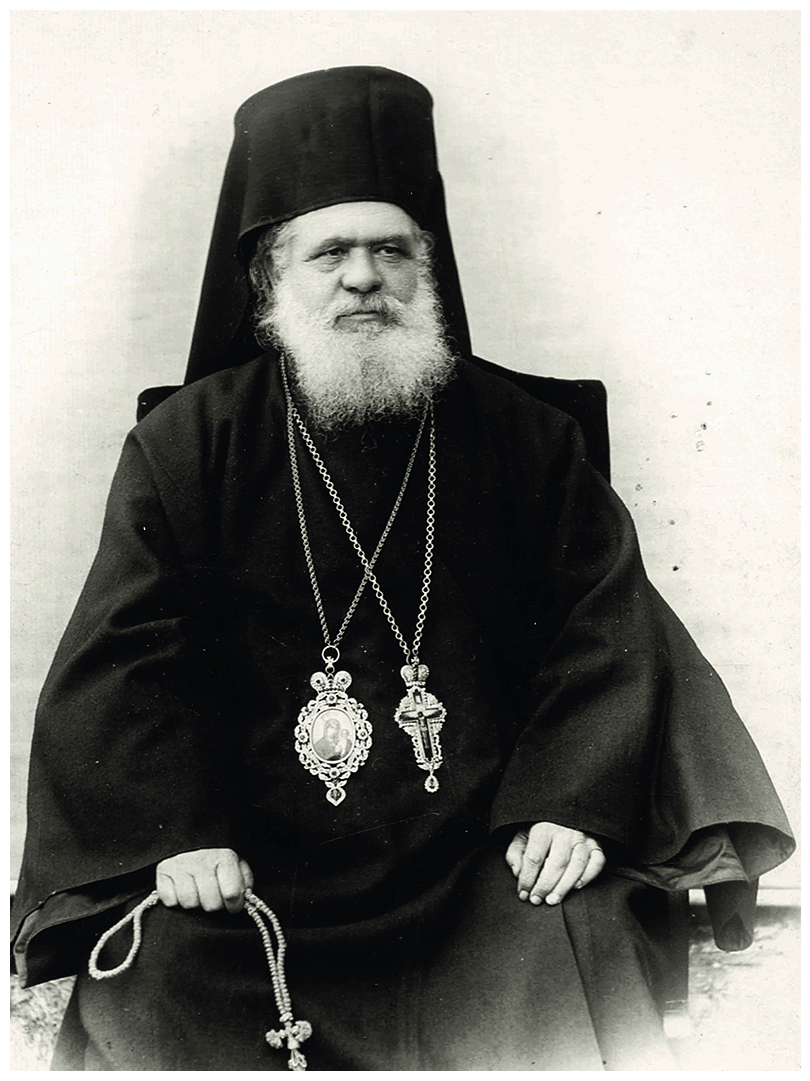
Teodosij Gologanov was a prominent Macedonian cleric, a fighter for Macedonian church and national independence. He was born in the village of Trlis, Drama, into a priestly family, with the secular name Vasil Gologanov. He received his high school education in Serez, after which he became a monk and served in several monasteries (Serez, Mostar, Plovdiv). After the formation of the Exarchate in 1870, Teodosij began serving within the Exarchate in Constantinople, being awarded the rank of archimandrite in the church of “St. Stephen”. In 1890, he began his activities as the Skopje Exarchate Metropolitan, appointed by Exarch Joseph I.
Metropolitan Theodosij Gologanov was a perceptive cleric who saw the harmful influence of foreign propaganda in Ottoman Macedonia, which led to divide the population, and hence encouraged him to launch initiatives for the formation of a separate Macedonian church through the restoration of the former Ohrid Archbishopric, as well as the introduction of Macedonian speech in schools and the printing of books in the Macedonian language.
His idea and commitment led to future political independence, following the example of the other Balkan peoples. Thus, the initiatives for the restoration of the Ohrid Archbishopric, in addition to anti-patriarchal, also acquired an anti-exarchal note, but at the same time the idea of the introduction of the Macedonian dialect was strengthened, which would inevitably contribute to the struggle for Macedonian political independence.
During his tenure as Metropolitan of Skopje, Theodosij took concrete measures to remove pro-exarchic officials from church-school municipalities and at the same time advocated for the opening of a special Slavic department in the Skopje vilayet printing house with the aim of printing textbooks in the Macedonian language.
After Gologanov’s anti-exarchic activities were discovered, in 1892 he was recalled to Constantinople, accused of “creating a nationality that did not exist in history”, after which he was stripped of the title “Metropolitan of Skopje” and was assigned to serve in monasteries in Bulgaria (Bachkovski, Rila Monastery and then Metropolitan of the Plovdiv Diocese and the Maronite Diocese). Towards the end of his life he worked as a lecturer at the Theological Academy in Sofia, where he died in 1926.