
GJORGJI SUGAREV (1879-1906)
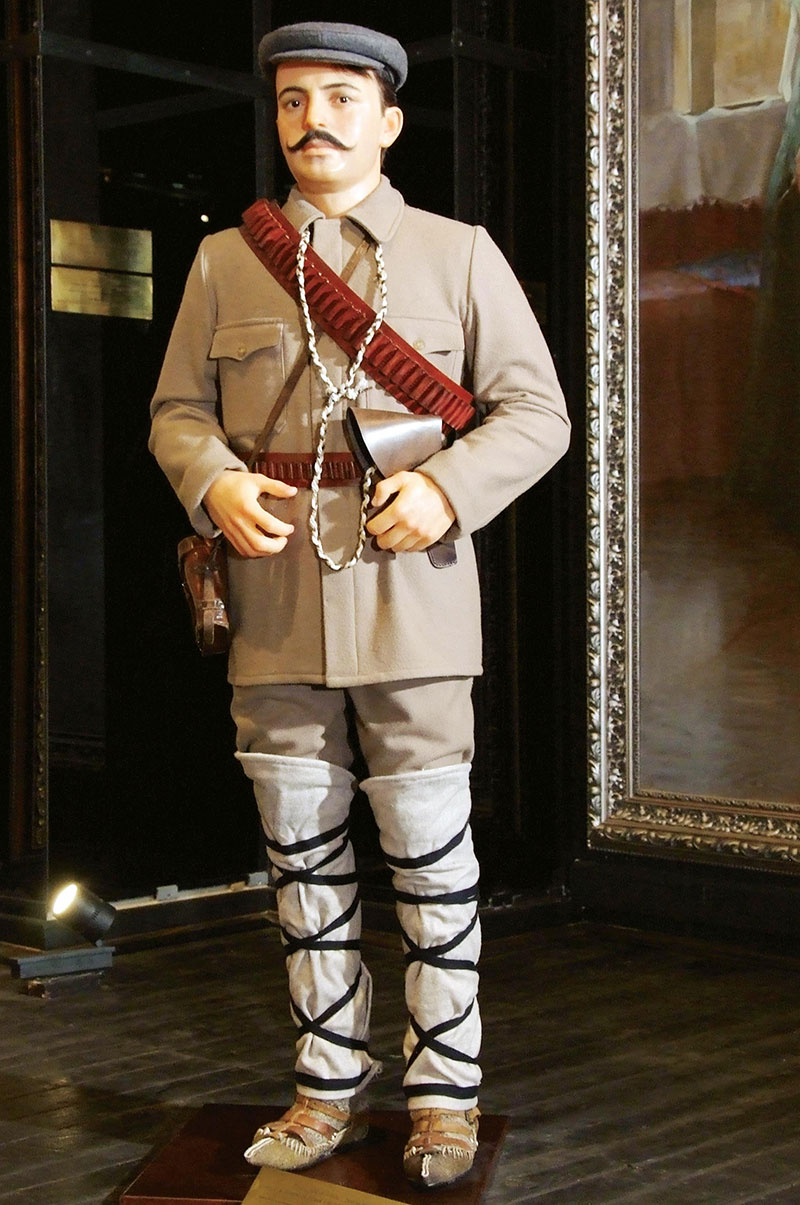 He was a teacher, revolutionary and commander. Whe was fluent on several languages, including Greek, Turkish, Bulgarian and Russian. In 1900, he was elected a member of the Bitola District Revolutionary Committee, and then as its secretary and commander. At the Smilevo Congress, where the decision to raise an uprising and the manner in which it would be led was made, Sugarev declared himself against the decision to raise an uprising at that moment, but was for the uprising and participated in it. After the Ilinden Uprising, he participated in the restoration of the Organization, advocating the idea of decentralization and democratization of revolutionary activity. In 1906, betrayed, he committed suicide during an Ottoman ambush without leaving the possibility of being captured alive.
HRISTO UZUNOV (1878-1905)
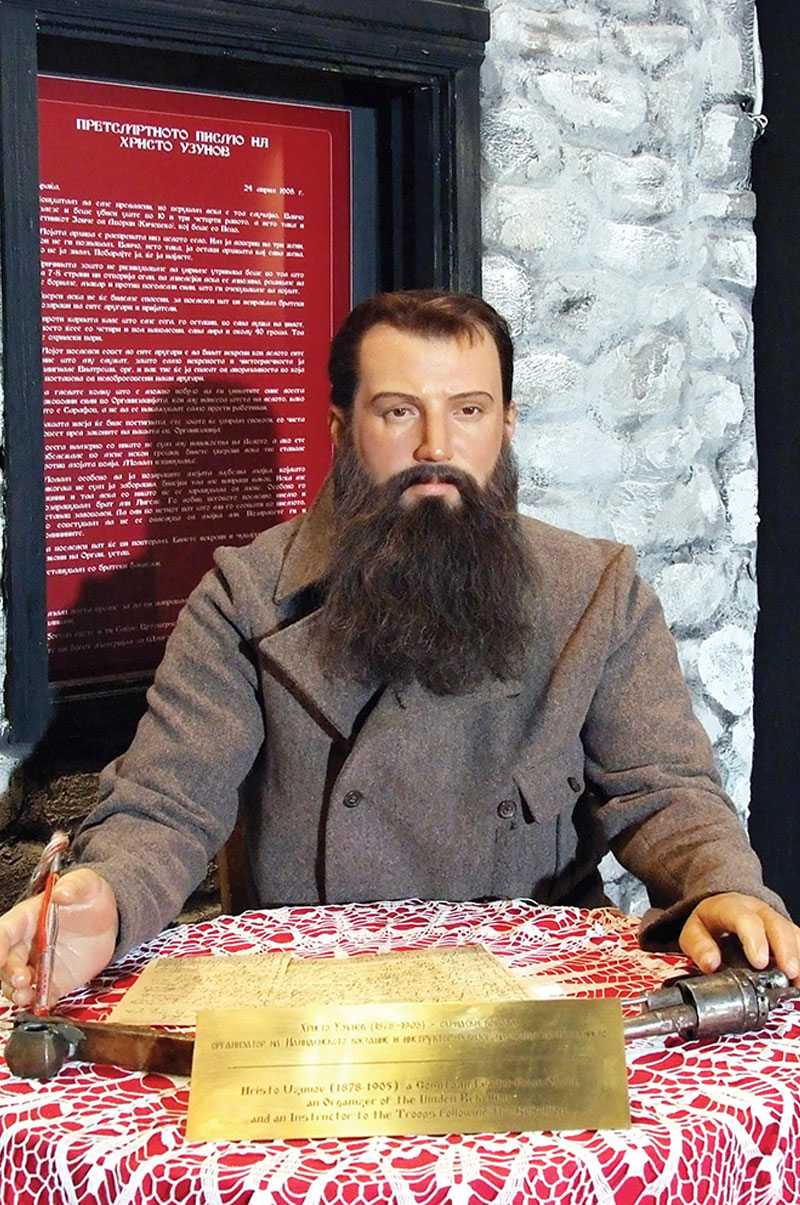
He was a revolutionary, a voivode and a teacher, an organizer of organizational work in the Ohrid-Struga region. As a participant in the Ilinden Uprising, after its suppression by the Ottoman armies, he remained in Macedonia in order to reorganize Macedonian revolutionary activity. His post-Ilinden revolutionary activity was mainly directed towards organizing the fight against foreign propaganda in Macedonia and resolving the ideological contradictions and problems that the Macedonian Revolutionary Organization was facing. In 1905, Uzunov and his company were betrayed and after some fierce resistance from the revolutionaries, they sacrificed themselves so as not to be captured alive.
Andart Massacre in village Zagorichani, Kostur,1905
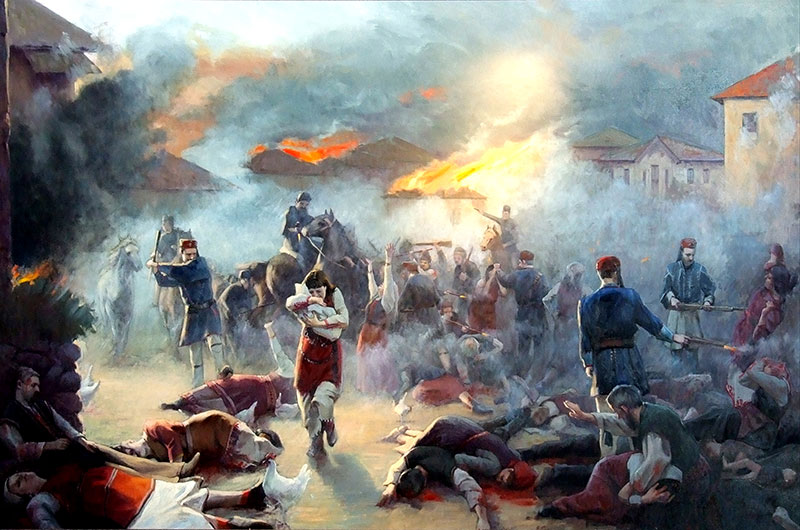
Greek Andart Chetnik formations, dressed in Greek army uniforms, led by Georgios Vardas-Tsontos, Georgios Katekhalis-Rouvas, Captain Doukas, Georgios Dikonimos-Makris and others, on March 27, 1905, set fire to the village of Zagorichani, Kostur region, and mercilessly massacred the unprotected population. The Andart killed about 80 villagers (men, women and children), and most of the village was burned. Such an act by the Greek Andart represented pressure on the Macedonian population to accept the jurisdiction of the Patriarchate of Constantinople, which was led by Greek clerical dignitaries.
ALBERT SONNICHSEN (1878-1931)
He was an American publicist and member-secretary of the Macedonian Committee in New York, USA, formed in 1904 by the American-Macedonian community in order to materially assist and at the same time present the work of the MRO to the world public. In 1904 he was sent to Bulgaria as a correspondent for various newspapers in order to familiarize himself with the struggles in Macedonia and to report on them. In early 1906 he moved to Macedonia where he participated as a Macedonian revolutionary in a Macedonian revolutionary company for several months. Following his stay in Macedonia, his return to the USA also meant the perpetuation of his memory of the Macedonian struggle through his work-novel “Confessions of a Macedonian Bandit (1909)”.