Macedonian Revolutionary Organization (1893 - 1903)

Македонска револуционерна организација (1893-1903)

The experiences of previous uprising attempts, the intensified revivalist course and development, and the increased number of Macedonian intelligentsia, especially teachers, led to a broad liberation movement that swept Macedonia in the nineties of the XIX century. The high point of this movement was the formation of the Secret Macedonian-Odrin Revolutionary Organization. The Macedonian Revolutionary Organization (MRO) was founded on October 23, 1893 in Salonica, and its founders were: Damjan Gruev, Ivan Hadzi Nikolov, Petar Pop Arsov, Hristo Tatarchev, Hristo Batandzhiev, and Andon Dimitrov.

The MRO decided to fight for political autonomy for Macedonia within the Ottoman Empire through a general people uprising. Then autonomy was understood as a transitional step towards the creation of a separate Macedonian state. To achieve this goal, important program documents (Constitution and Rules of Procedure) were adopted with a clearly defined goal, then a wide network of hierarchically placed secret committees and a strictly hierarchically organized armed force – squads was created throughout the entire ethno-geographical territory of Macedonia.

The organization was widely supported and accepted by all layers of Macedonian society, which is why it gradually grew into the most important factor in the struggle of the Macedonian population for free development and change of the state and social order of the Ottoman Empire. Such a course of events contributed to the revolutionary organization being called the “Underground Republic” and acting as a state within a state with its own judicial authority, its own police and a huge armed people’s force, penal squads, with its own educational force composed of teachers-members of the Organization, agitators for the Macedonian cause and a secret postal service.

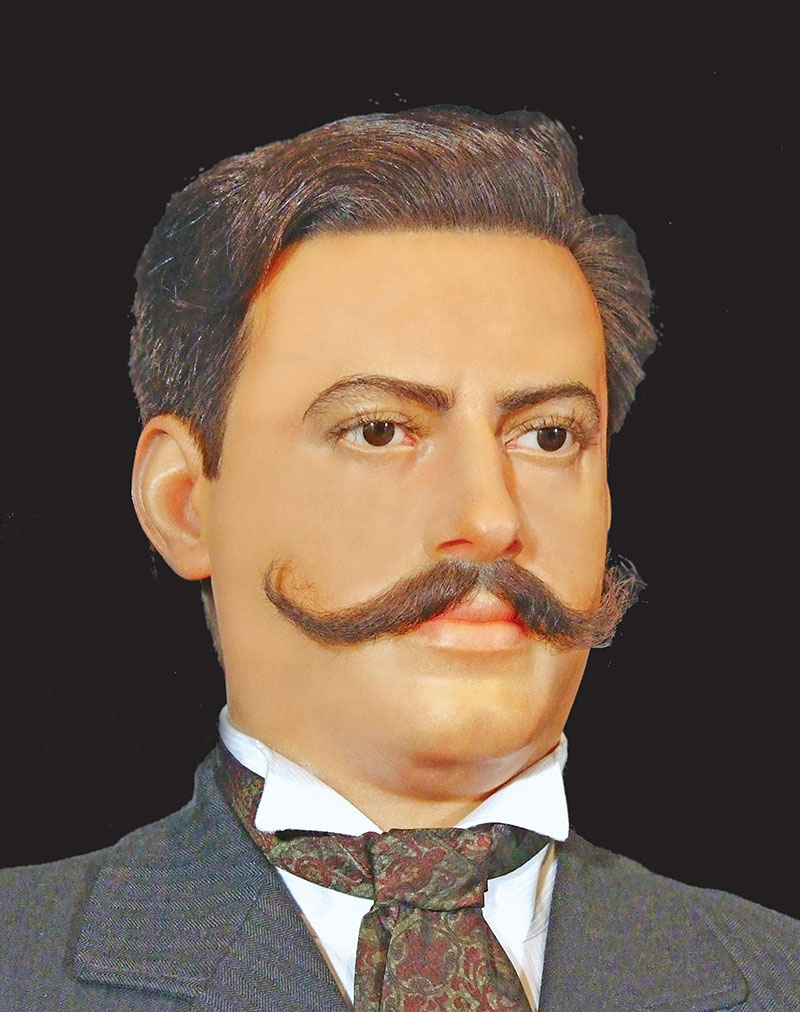
GOCE DELCHEV (1872-1903)

ГОЦЕ ДЕЛЧЕВ (1872-1903)An ideologist, strategist and national hero, a representative of the Macedonian intelligentsia, avant-garde activist that marked the Macedonian revolutionary struggle at the end of the 19. and 20. century.

DELCHEV, Gjorgi (Goce) (Kukush, February 4, 1872 – in the village of Banica, Ser County, May 4, 1903, today’s Republic of Greece) – ideologue, organizer and leader of the Macedonian revolutionary national liberation movement in the late 19th and early 20th century.

He was educated in Kukush, where he completed his high school education (1879–1887), in Salonica, in the Bulgarian high school “St. Cyril and Methodius” (1888–1891) where he led a secret student revolutionary circle, and in Sofia at the Military School (1891–1894). He returned to Macedonia (1894) and was a teacher in Novo Selo in Shtip. There he met Dame Gruev and became involved in the leadership of the Secret Macedonian Revolutionary Organization. He expanded the network of the Organization (spring of 1895) and organized several secret channels through Vinica. In Salonica, he participated in the consultation with the leading figures of the MRO: Dame Gruev, Pere Toshev and Ivan Hadzi Nikolov, for taking a position on the Macedonian Committee established in Sofia, later renamed the Supreme Macedonian Committee. In September he was appointed director of the school in Shtip. Before the end of December 1895 Delchev, authorized by the Central Committee of the MRO, traveled to Sofia to work on preventing interference by Bulgaria in the internal affairs of the Macedonian liberation movement. He organized MRO checkpoints in Kjustendil and Dupnica (in the beginning of 1896), and in February in Shtip, he organized a protest demonstration against the government. He participated in the Salonica Congress (5–12 April 4, 1896) at which a new ideology and strategy in action was adopted, including the Edirne region, and thus the change of the name from the MRO to the Secret Macedonian-Odrin Revolutionary Organization (TMORO). Together with Gjorche Petrov they drafted the Constitution and the Procedure manual of the Organization (1896), published and distributed in 1897, where the goal of the Organization’s activity was to gain political autonomy for Macedonia and the Edirne region with a revolution.

He was arrested in Shtip (April 1896) in connection with the affair with the seizure of bombs in Bitola, and in May he was arrested again and taken to Skopje where he was imprisoned in Kurshumli-an. In September, Delchev was appointed head teacher (principal) in Bansko, from where he continued the activity of spreading the network of the Revolutionary Organization. He resigned from his teaching duties (November 1896) and devoted himself entirely to the Macedonian liberation work. Took the duty of Overseas Representative of the MRO in Sofia (from 16. 12.). In a letter to the Catholic Archbishop of Plovdiv, Menini (in July 1898), he presented to the Vatican the goal of the Macedonian struggle: to correct the unjust solution of the Berlin Agreement for Macedonia and to gain full political autonomy. He performed the duty of a foreign representative until 6.10.1901 and was a mobile member of the Central Committee. In that capacity he was dedicated to the operation of the secret channels, the courier service, the secret post office, the provision of material resources and the supply of the Organization with arms, ammunition, revolutionary literature and newspapers. Organized the production of bombs and explosives (1897) in the village Sabler (in the Osogovo Mountain), and then on Sveta Gora (between the Zografski Monastery and Hilandar). He carried out army supplies (in April 1898) and the first armed detachments of the Organization appeared in Macedonia. Together with Gjorche Petrov they drafted a Rulebook for the аrmed units (1900). With the formation of the village militia, the military organization of the MRO was added, which was directly managed by Delchev, with the status of chief auditor. The revolutionary organization took over the judiciary and the executive order. A secret Macedonian state operated in the Ottoman state. At the Salonica trial for the Novo Selo affair (beginning of 1901) Delchev was sentenced to death in absence. After receiving the notification about the arrest of the members of the Central Committee in Salonica, in mid-March with Gjorche Petrov they issued an instruction letter to the all military committees and their leaders to continue acting according to the existing program. In order to strengthen the ranks in the Organization, he undertook an inspection instruction tour in the Central and Western part of Macedonia (from August 1901 to March 1902). At the end of September, he strongly condemned the armed action in Gorna Dzumaja, declared an uprising. He also opposed the start of an early uprising in Macedonia. Delchev rejected the decision of the Salonica Congress (January 15-17, 1903) to start an uprising on January 25, 1903 and went with a detachment to the interior of Macedonia to seek the withdrawal of the decision. In April, he met with Dame Gruev in Salonica, who had just returned from captivity, accepted the decision and remained determined. From Salonica he headed for the Ser County at the scheduled congress of the Ser Revolutionary District (6. 5). Arrived in the village Banica, Ser, at May 3. All the way from Sofia to Salonica he was followed. The Ottoman army surrounded the village and in the morning battle Delchev was killed.

Since 1946 his eternal home is in The Church of the Ascension of Jesus in Skopje.

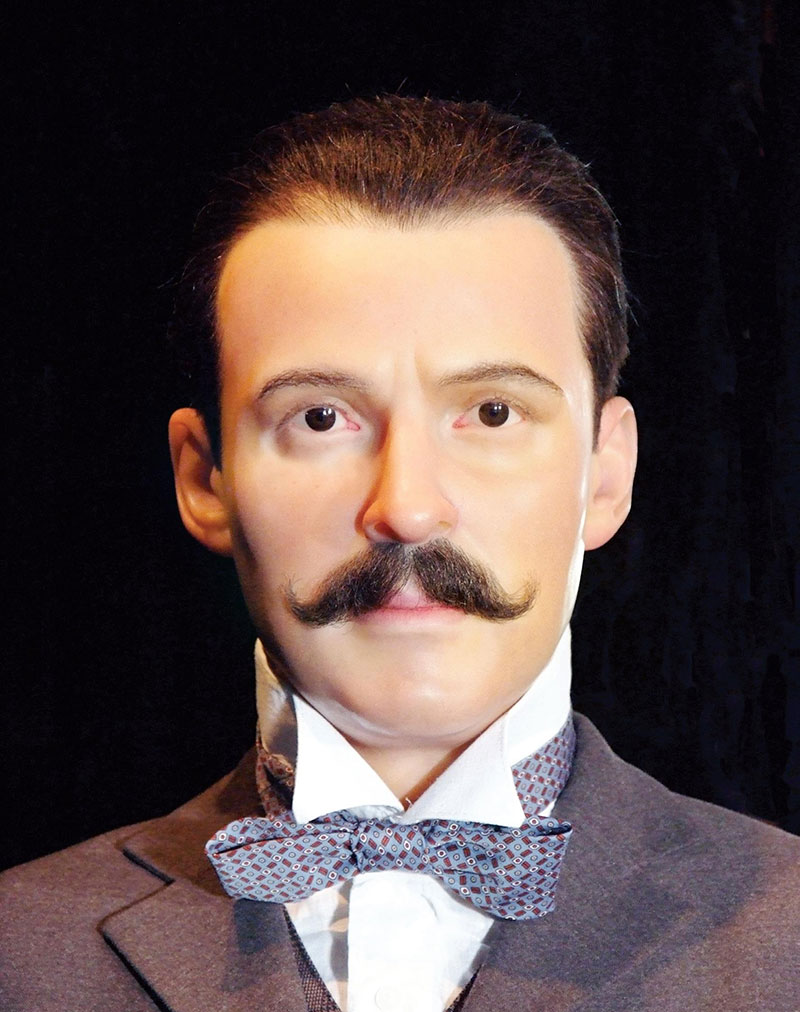
FOUNDERS OF MRO

IVAN HADZI NIKOLOV (1861-1934)

He was a revolutionary, teacher, bookseller, merchant and one of the founders of the MRO in Salonica, in 1893. As an opponent of the Bulgarian Exarchate, the main conduit of Bulgarian church-educational propaganda in Macedonia, he also set the method of accepting new members into the Organization. His revolutionary activity ended with the unsuccessful Ilinden Uprising of 1903, when he withdrew to Sofia and continued his bookselling and publishing activities there.

HRISTO BATANDZIEV (1865-1913)

He was a teacher and revolutionary, one of the founders of the MRO in Salonica, in 1893. In the period from 1888 to 1911 he was a professor at the Salonica Boys’ Gymnasium and secretary of the Salonica municipality. After the Young Turk Revolution he actively participated in the Union of Bulgarian Constitutional Clubs in Macedonia. With the outbreak of the Second Balkan War he was arrested by the Greek authorities and treacherously murdered.

HRISTO TATARCHEV (1869-1952)

He was one of the founders of the MRO and its first president, a revolutionary and a publicist. In 1902, he was appointed as the overseas representative of TMORO in Sofia, together with Hristo Matov. He was a supporter of the idea of a general popular uprising, as opposed to Goce Delchev and Gjorche Petrov, who advocated a strategy or permanent uprising. After the Ilinden Uprising, he took the side of the conservative wing of the Organization, advocating a centralized form of revolutionary activity. He stopped his revolutionary activity in the period between the two world wars, which is why he moved to Turin and remained there until the end of his life.

DAMJAN DAME GRUEV (1871-1906)

He was a teacher, revolutionary and one of the founders of the Macedonian Revolutionary Organization. In 1893, he was one of the instigators of the establishment and one of the founders of the MRO in Salonica. He was credited with the spread of the Organization, as well as the formation of the first revolutionary committees, or nuclei, which laid the foundation for the Bitola Revolutionary District. Together with a number of other Macedonian activists and ideologists of the Macedonian revolutionary cause, he advocated for the inclusion of the entire population of Macedonia in the ranks of the Organization, regardless of religion or nationality. In 1903, he participated in the preparations for the Ilinden Uprising as a member of the Main Insurgent Headquarters of the Bitola Revolutionary District, and after the Uprising, he remained in Macedonia in order to reorganize the Organization. His position after the Uprising was to maintain the centralized form of revolutionary activity, but he openly collaborated with the reformist wing that demanded decentralization and democratization of the work, while advocating unity of all ideologically opposing sides in the reorganization of the MRO. In 1906, he died in an Ottoman ambush near the village of Rusinovo, Berovo region.

PETAR POP ARSOV (1868-1941)

He was a philologist, teacher, revolutionary and founder of the Young Macedonian Literary Society, and in 1893 one of the founders of the MRO in Salonica, as well as the author of the draft Constitution of the MRO. He was a publicist and editor of the newspaper “Loza” and the author of the booklet “The Stambolovshtinata in Macedonia” where he exposed the policy of the Bulgarian Prime Minister, Stefan Stambolov, towards Macedonia. Arrested after the Salonica assassinations, he failed to take part in the Ilinden Uprising. After the Rila Congress Uprising, he was elected as the overseas representative of the VMORO, advocating the position that the reorganization of the VMORO should continue in the direction of decentralization and democratization of the work. After the Young Turk Revolution, he participated in the People’s Federative Party and in the parliamentary elections for the Turkish parliament in 1910. He was an advocate for an independent Macedonian church and independent education, as well as for the opening of a Higher Pedagogical School in Skopje. In 1930 he moved to Sofia, where he died in 1941.

ANDON DIMITROV (1897-1933)

He was a teacher and revolutionary, a lawyer, and one of the founders of the Macedonian Revolutionary Organization in Salonica in 1893. In 1903, he was appointed director of the exarchate schools in Prilep, and in 1904, he was elected a member-judge of the Bitola Court of Appeal. After the Young Turk Revolution, he was one of the founders of the Union of Bulgarian Constitutional Clubs, and at the founding congress of the aforementioned Union, he was elected president of it. Between 1915-1918, he worked in the Ministry of Justice of Bulgaria, and then in the Ministry of Foreign Affairs of Bulgaria. In 1920, he was elected president of the Executive Committee of the Macedonian Brotherhoods in Bulgaria. After the divisions of ideologically opposing currents in the Macedonian revolutionary movement, he withdrew from active participation in it.

ANDON TOSHEV STOJANOV (1867-1931)

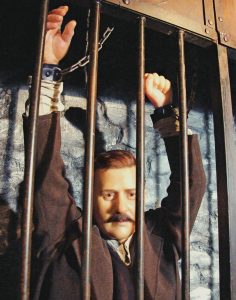
He was a participant in the Macedonian revolutionary movement, an activist and courier of the MRO. In 1896, while transporting bombs in sacks of rice, he was accidentally exposed and imprisoned by the Ottoman police authorities, but in prison he managed to withstand the fierce and inhuman tortures, which is why he never committed treason against the Organization. Amnestied, he fled to Bulgaria where he continued to act for the Macedonian revolutionary movement.

HRISTO MATOV (1872-1922)

ХРИСТО МАТОВ (1872-1922)He was a Macedonian revolutionary, a graduate of the Faculty of Philology in Sofia and a teacher in Ser, Skopje, Salonica, Sofia and Stara Zagora. He was also one of the members of the Central Committee of the TMORO, and from 1902 he was the TMORO’s representative abroad in Sofia and a supporter of the Ilinden Uprising in 1903. After the Ilinden Uprising he took the side of the conservative wing that advocated the centralization of the TMORO (VMORO). He died in Sofia in 1922.
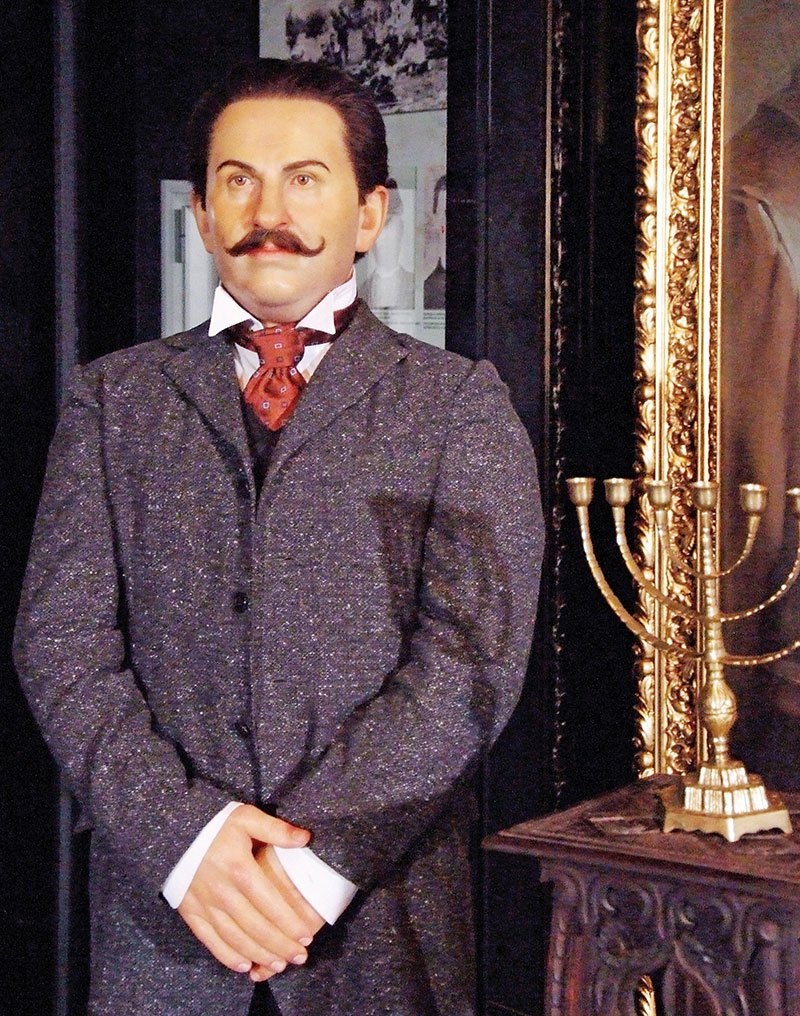
RAFAEL KAMHI (1870-1969)

РАФАЕЛ КАМХИ (1870-1969)He was a Macedonian revolutionary of Jewish origin, a collaborator of prominent Macedonian revolutionary figures and ideologists, and a supporter of the Macedonian revolutionary cause with material means. In 1903, he took part in the Ilinden Uprising, and in 1905 he also participated in the Rila Congress, where he supported the decentralization and democratization of the Macedonian revolutionary cause.

JANE SANDANSKI (1872-1915)

ЈАНЕ САНДАНСКИ (1872-1915)Macedonian revolutionary, ideologist and military organizer of the Macedonian revolution, follower of Goce’s ideas and fierce opponent of foreign policy and propaganda in Macedonia, fighter for an autonomous Macedonian state and fierce persecutor of the vrhovist groups as exponents of Bulgarian policy in Macedonia. He participated in the Ilinden Uprising, organizing and leading detachments in the Ser Revolutionary District. As a participant in the Young Turk Revolution, Sandanski was one of the creators of the People’s Federative Party, advocating for regional self-government of Macedonia within the Ottoman Empire. He participated in the Balkan Wars, hoping for a Macedonian state, and as an opponent of the Bulgarian Tsar, while clearly expressing his views on a separate Macedonian state, was killed in 1915.
Scroll to Top