
the political, cultural and educational activity of
the macedonian intellectuals in the pre-ilinden period
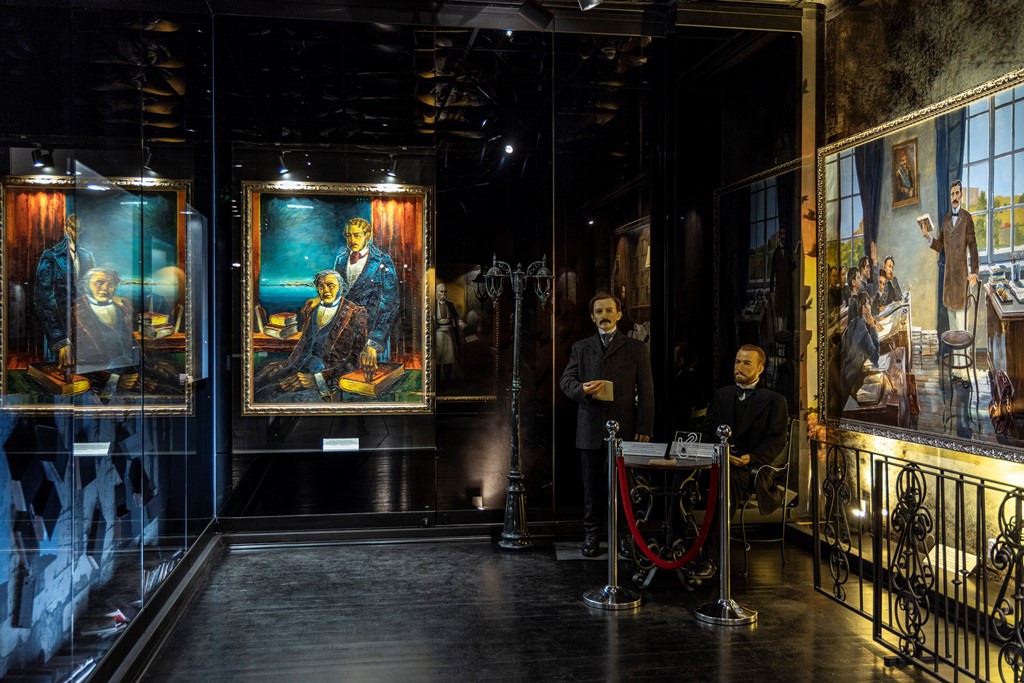
In the national, liberation and revival processes of the Macedonian people in the XIX and XX century special place takes the Macedonian struggle for religious and educational emancipation. The Macedonian leaders of national revival, textbook writers, fighters for renewal of the Archbishopric of Ohrid, which was abolished in 1767, with their activities left a special mark in the general fight for freedom of the Macedonian people, self-rising and differentiation in the revival of the Balkan people, which spoken language was the Slavic. Of great importance is the fact that the Macedonian revivalists were predecessors, and few of them were even direct participants in the organized Macedonian revolutionary movement – Secret Macedonian-Odrin Revolutionary Organisation (SMORO).
In the revival and educational activity, with their enormous enthusiasm, diligence and search for the Macedonian roots, special mark also left Dimitrija and Konstantin Miladinov, Jordan Hadji Konstantinov – Djinot, Kiril Pejchinovikj, Joakim Krchoski, Partenij Zografski, Kuzman Shapkarev, Konstantin Petkovich, Rajko Zhinzifov, Marko Cepenkov and many others. Beside them, at the end of the XIX century and the beginning of the XX century, numerous Macedonian intellectuals, outside the borders of their homeland Macedonia, had organized many migrant, cultural and educational organisations, which played significant role in the creation of separate Macedonian identity, language and self-awareness. Among those Macedonians, special place take the following: Krste Misirkov, Dimitrija Chupovski, Damjan Gruev, Petar Pop Arsov, Nikola Naumov, Hristo Pop Kocev, Georgi Balaschev, Kosta Shahov, Eftim Sprostranov, Ivan Hadji Nikolov and others.
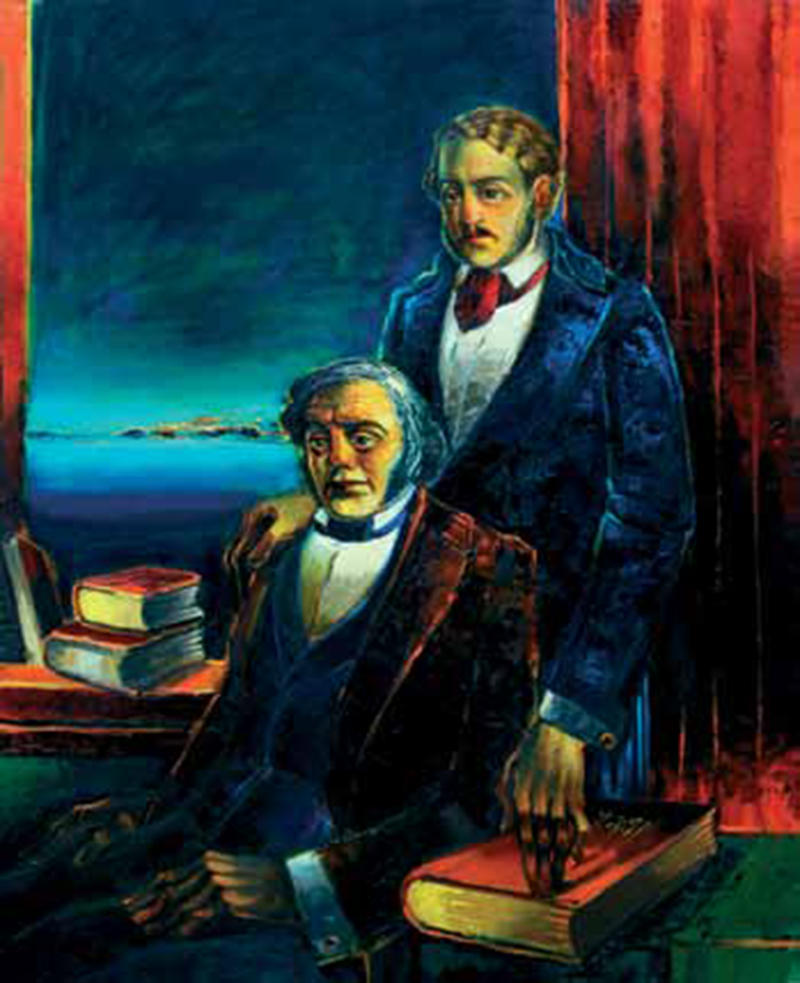
DIIMITAR MILADINOV (1810-1862)
Macedonian revivalist, publicist, translator, national protege, fighter against Hellenism, leader and educator – teacher of an entire generation of Macedonian revivalists, including Konstantin Miladinov, Grigor Prlichev, Rajko Zhinzifov, Partenij Zografski, Kuzman Shapkarev, Gjorgija Pulevski and others. He was an advocate of the Macedonian vernacular in schools and Church Slavonic in worship. He was a collector of folk tales and the true author of the Collection of Miladinovci, which is considered the most significant work of the period of the Macedonian revival.
KONSTANTIN MILADINOV (1830-1862)
Macedonian revivalist and founder of the new Macedonian poetry, editor and publisher of the Miladinov Brothers’ Anthology, publicist, teacher and translator. He graduated from the Faculty of Philosophy in Athens, Department of Greek Philology, and then studied Slavic Philology at Moscow University (he did not complete his studies). He is the author of a large number of poems, of which “T`ga za jug” has the greatest artistic value. All his poems are written in the Struga dialect.
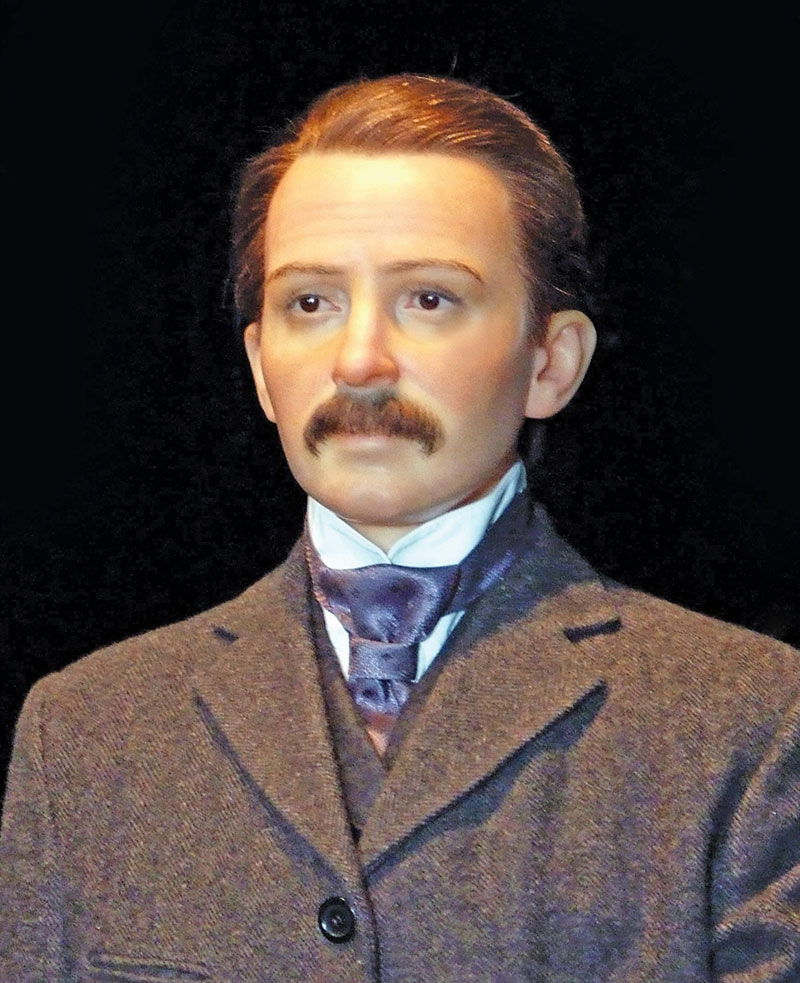
GRIGOR PRLICHEV (1829-1893)
One of the most prominent Macedonian poets in 19th century Macedonian literature. He was a teacher and Pan-Slavist, a national defender against Greek propaganda, a translator, a publicist, a polemicist and an autobiographer. In 1850 he enrolled at the Faculty of Medicine in Athens, and in order to continue his studies, in 1860 he participated in the poetry competition in Athens where he won the prize for the best poetic work with the poem “Serdar” (“O Armatolos”). Awarded with a laurel wreath, money and the epithet “second Homer”, refusing to renounce his Slavic origin in favor of Greek propaganda in Macedonia, the Greek side terminated his awarded studies in Berlin or Oxford. After returning to Macedonia, his fight was directed against the representative of Greek propaganda in Ohrid, Bishop Meletius. His life was characterized by a fight against Greek propaganda in Macedonia, for which he was persecuted and imprisoned several times. His works include: the poem “Serdar”, the poem “Skenderbeg”, the Autobiography and others.
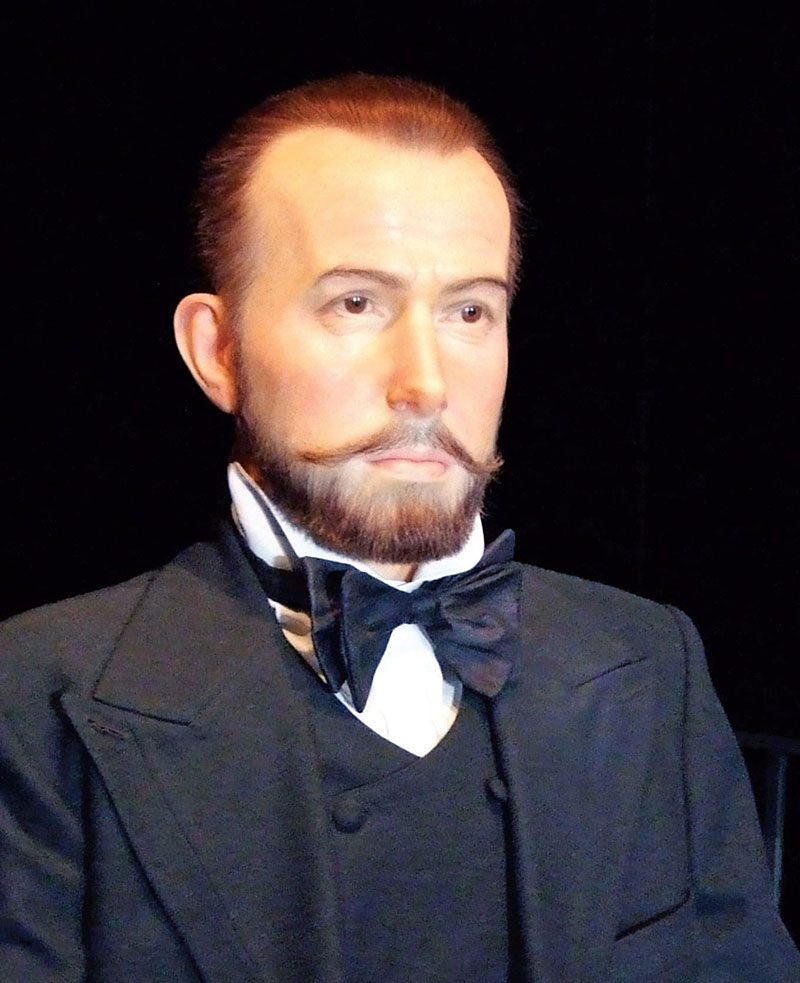
KRSTE PETKOV MISIRKOV (1874-1926)
He was a Macedonian teacher, linguist and thinker, codifier of the Macedonian literary language and orthography, polemicist and publicist, historiographer and apologist for Macedonian national identity, a fierce opponent of foreign propaganda in Macedonia and an analyst of the overall situation in Macedonia, a graduate of the Faculty of Philology in Petrograd with a thesis on the topic: “On the question of nationality and the reasons for the popularity of the Macedonian King Marko” and publisher of the first scientific, literary and political magazine in the Macedonian language “Vardar” in 1905.
He was a participant and one of the founders of the Secret Macedonian-Odrian Circle in Petrograd and the Macedonian Scientific Literary Fellowship “St. Clement”. Misirkov was an advocate for the recognition of the Macedonian Slavs, the elevation of the Macedonian language to the level of a literary language, the restoration of the Ohrid Archbishopric and the achievement of full autonomy within the Ottoman Empire. His most important articles are: “Macedonia and Slavism”, “Self-Determination of the Macedonians”, “The Struggle for Autonomy”, “Our Faith”, “Macedonian Culture”, “Macedonian Nationalism” and his most important work “On Macedonian Affairs” (Za makedonckite raboti) where the codification of the Macedonian literary language was also made.
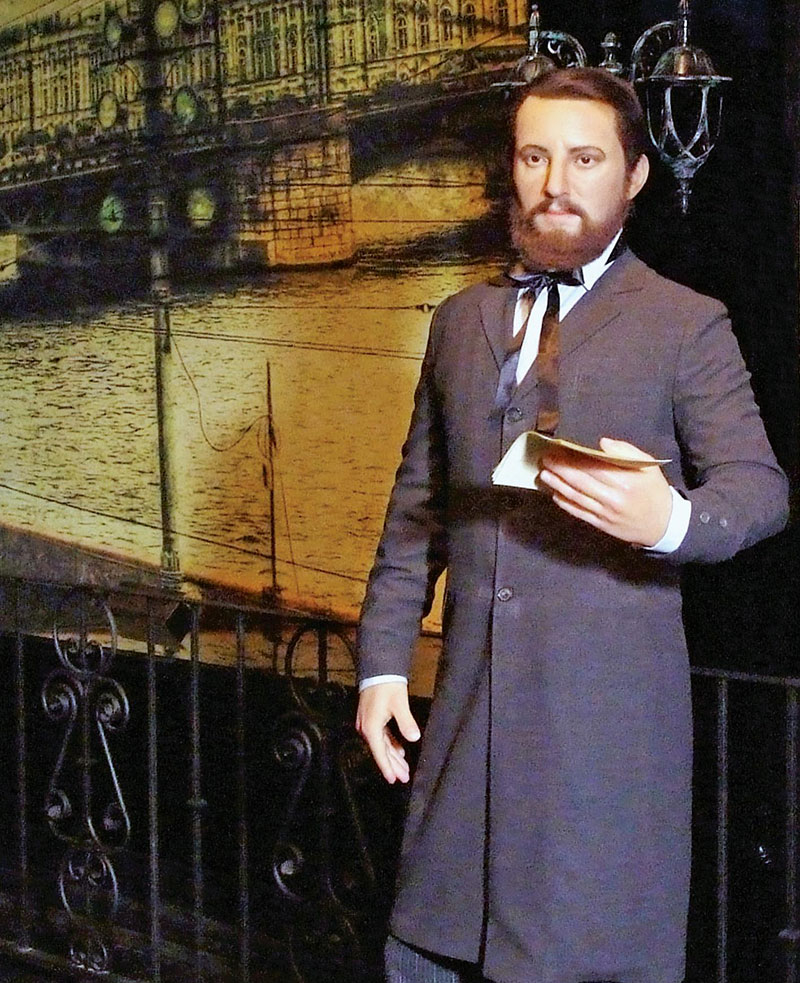
NAIM FRASHERI (1846-1900)
Together with his brother Sami Frasheri, he is the founder of the modern Albanian alphabet.